Beyond AI: Why Manual Audiobook Editing & Proofing are Vital
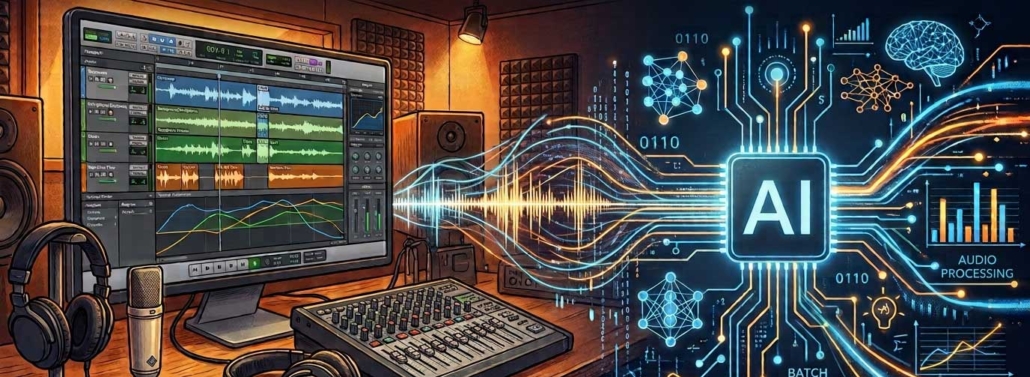
With all of these advancements in technology, the world of audiobook production is evolving. There are programs that allow for quicker text matching, and scanning programs that allow you to produce your work at a faster rate and at a lower cost. It's very exciting for our workflow and creativity. If you're working in the world of publishing, you should know how to utilize these techniques to help you produce your work faster.
At TravSonic, we love technology and use a hybrid approach when working with manual editing and automation. We will use technology for early drafting and prep.
We use custom proprietary software and automated setups to handle the heavy lifting, like cleaning up background noise, converting files, and making sure the audio meets strict retail guidelines. But even as software gets better at processing audio, one simple truth remains for authors and publishers: software can read an audio wave, but it cannot listen to a story.
There is more to editing an audiobook and doing QC than having a program tell you what matches what on your computer screen. It's an art. You can never go off of programs and software alone to complete your books. There is always that 10% that makes a great audiobook.
The Big AI Reality Check: Then vs. Now
Since the rise of generative AI, there has always been a prevailing theme that all jobs would be automated.

Now we're beginning to see an 'AI Boomerang'. Companies tried to automate everything but fell short because they didn't have the proper operating models to incorporate humans in the process. As recent industry analysis points out, enterprises are discovering that simply 'bolting on' AI without a strategy leads to chaos, not efficiency.
After that point, things took a big turn toward reality. There is now a middle ground that most have come to terms with.
Yes, entry-level assistant tasks have largely been handed over to automation. Machines are great at machine room work. Labeling tracks, using template sessions, organizing multitrack clips, and folder management, etc. These tasks no longer require your extensive time at the audio desk.
By automating the prep work, master engineers can spend their time focused on what actually matters: critical listening, artistic nuance, and meticulous manual verification. The major attention to detail required to deliver a retail-ready master still remains an exclusively human job.
The Hidden Math: The Multi-Million Dollar Token Trap
A lot of media companies tried to jump on the bandwagon and automate as many jobs as possible with their outsourcing pipeline. They assumed this would allow them to save money. But they failed to understand how expensive AI can get when working with tokens and server inference.
There is a lot of data in audio files and books. If you were to take an average book and try to run it through a text-to-speech (TTS) AI without properly optimizing your prompt, you would use a crazy amount of data. The same goes for running hours of film audio through cloud AI multiple times to clean.
AI is not free. In fact, most companies will find that it will cost them more than they expected once they start getting their bills. As these companies have been finding out, their API charges have been in the millions of dollars.
It's cheaper to hire a professional who will be able to mix your audio correctly the first time.
A Matter of Creative Integrity: Why We Refuse to Outsource Trust
When someone gives us their project as an author or publisher, they're entrusting that company with their hard work and money that took them months, if not more, to complete. So when we receive those projects, we want to take pride in what they have given us.
There is no reason why a company would take a big project from one of their clients and throw it into an AI program. You drop your tracks in the program, hit render, and call it a day? No one is actually listening to that piece of music from beginning to end.
We all know you can't trust an unknown program 100% when it comes to AI. There's no pride in what you're creating when you're using these types of programs. It's just not going to have the same quality that we would give to our clients and their story. We like to think that technology will help us but not take the place of humans.
Where AI Shines: Speeding Up the Technical Work
To understand why a combined approach works best, we look at what automated tools actually do well. When used at the very beginning of a project, software acts as a great assistant for the engineering team:
- Technical Quality Checks: A great tool for analyzing big files in a short amount of time. We currently use it to analyze file lengths, make sure it's in the correct format, check for damaged files, DC offset, measure background noise, and detect obvious errors that we would want QC to find.
- Batch Conversions and Sorting:
- Converting large amounts of audio and placing them where they need to go. Manually doing this for all the files we receive would take forever. Our programs allow us to convert them all at once and place them in their proper project folder with proper file names.
- Finding Big Mistakes: Catching obvious blunders. There are many programs out there that will compare your audio to the text and point out where you may have made a big error. If someone stumbles over something and says it twice or leaves a big breath on the mic. This will get those repetitive sentences and outtakes out of your files, saving you time.
- Cleaning Up Noise: Modern audio repair plugins are a massive help. They can isolate a voice and remove unwanted sounds like room echo, clothing rustle, or background hums that used to ruin a recording.
- Initial Text Alignment: Lining up text to the audio. Having a program line your text up to the audio can save you a ton of time. But you will still need to listen to each flagged section to see if there is an actual error.
What AI Cannot Do Well in Audio Production: The Hard Boundaries of Automation
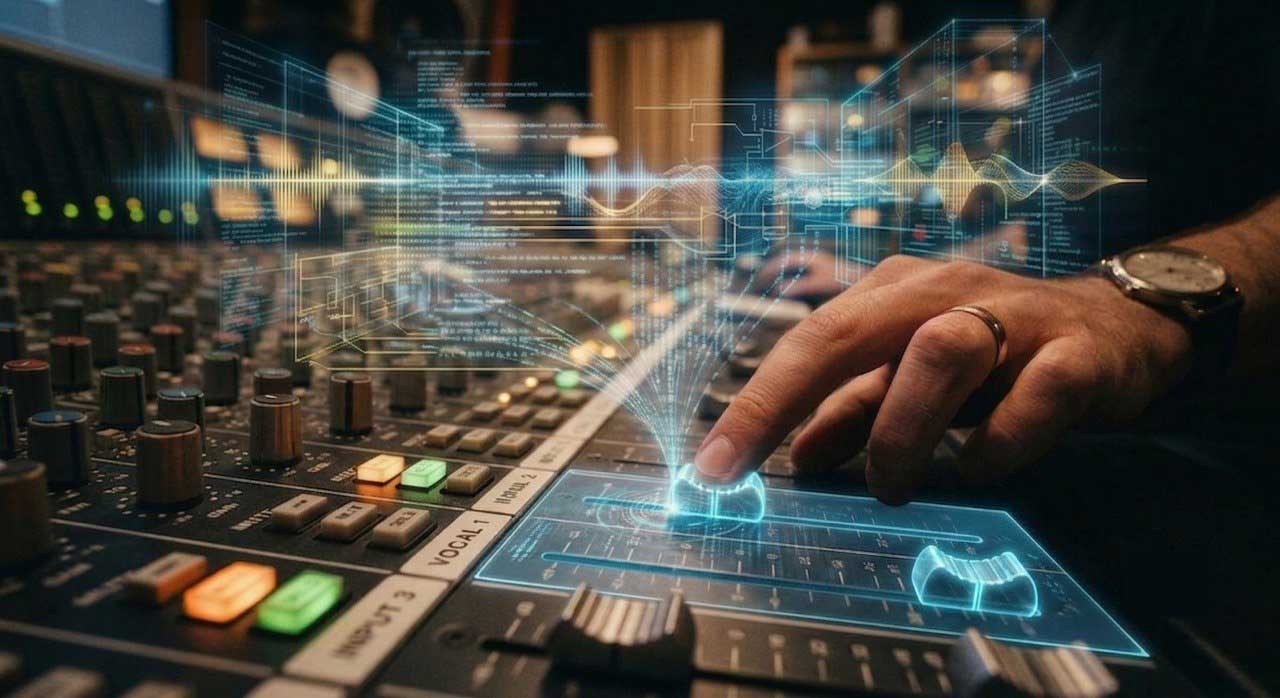 Technology will only get better, but we can only take software so far. If you need the human touch on something or have to make some artistic decisions. That's where software can't come into play as of 2026.
It usually isnt a fault of the AI most of the time. Humans try to input proper prompts and formatting and scripting. You need to give your machine what you want it to do with that basic prompt. Otherwise its going to take what you type in and just run with it.
- Professional Story Editing: Currently, there isn't any AI that will edit your story properly. As we are able to convert audio to text, we can feed it into the program, but it's only going to hear it as text. So it doesn't know what an edit will do to your story. Your audio will be chopped, you'll hear stuttering, and many other things that can be annoying to the listener. Which is why we still have to edit stories by ear.
- Missing Voice Shifts and Retakes: Currently (2026), there are many things AI cannot pick up on. When it comes to changes in delivery while doing pickups and retakes. The computer will tell you it matches your script, but it won't know if someone delivered the sentence with more or less enthusiasm. We can catch these right away and make sure the flow sounds natural.
- Strict Manuscript Traps and Natural Adaptations: There are many rules that programs follow and stick to strictly. If your narrator knows the material and decides to say something that flows better, then we will not flag it. An example would be if your narrator said "As we listen on" instead of what is typed in your manuscript, "As we read on". Traditional software will think this is an error. There are so many things a good narrator will change to make it sound more natural, and we have to manually go through each one and approve it.
- The "Messy Manuscript" Problem: Digital files can be very tricky. If you have any hyperlinks, special characters, or any other things in your manuscript, the AI voice may become confused about how to read it. It could stumble on hyphens or read through parts of your manuscript and not even know it. Which is why having your prompt knowledge and script cleaned up will help ensure your output is what you're looking for.
Case Study: When Raw Text Breaks the Machine
Here is an example. We were contracted to complete an AI Audiobook. The client gave us the AI voice files that they generated on a TTS platform. Our task was to edit it to be as clean as possible.
When we listened to the audio, we noticed that the manuscript was not formatted and cleaned for TTS to use to generate the AI voice.
There were countless errors from the text not being edited before using it for TTS. Words were mispronounced because of how they were written out. Hyphens caused sentences to be butchered. Any special characters would cause it to stumble. Numbers were not read correctly.
Our team had to do over one thousand AI voice generations to fix these errors. We had to have our engineers go through and edit each error that the AI made. It ended up taking us 3x as long to edit this file compared to having a human narrator read it.
With all of those regenerations and credits spent, it would have been cheaper to use a narrator.
The Solution: Manuscript Sanitization and Formatting for TTS
That's what prompted us to take action and fix the issue. We want to save you from dealing with those huge problems on the back end. So we have created a service that will sanitize and prepare your manuscript for our text-to-speech software. Saving you from having to spend extra time and money on software credits.
Our team will take your text file and prepare it to be used in our software. Fixing any incorrect formatting and prepare it for the software to read your book the first time. This can save you weeks of correcting errors in your text file.
Not only do we know what works when preparing a file, but we have also developed AI voice auditioning software. This allows us to test your new text file and listen to how the AI voice will read it.
This can help us spot and correct any pronunciation issues that may arise when generating your final product. Saving you from wasting credits on generating your books.
When Code Fails: A Real-World Quality Check
This can happen even when using Humans. Workflows will fail you if you don't program them right.
It's important to point out that there are AI programs that are very good at catching script discrepancies and other technical issues. They are very effective when it comes to finding errors that may occur when proofing your scripts for basic needs. These platforms just don't have that final touch of human understanding. When you try to build your own proofing method with flawed programs, you'll find yourself needing to manually check things as well.
We recently had a client who wanted to do their own quality check on some human-narrated master files that we had sent them. They took our finished files and input them into an outside AI program. They then outputted those transcriptions to a platform like ChatGPT to see what kind of errors may have occurred between the transcript and the book.
It came back with many errors that were found throughout the book. Missing sentences and odd pauses were scattered throughout the chapters. Our team went back and listened to the files ourselves because we always double-check our work. We found no errors in the files. All words were placed correctly, and the audio sounded great.

What caused this?
The breakdown didn't happen because of a flaw in our master files, it happened because of how the makeshift workflow was put together. The initial platform used to generate the transcription misheard several words, struggled with standard inflections, and failed to transcribe sentences accurately when the narrator took artistic liberty. Because the engine injected its own errors into the text file, it handed a heavily flawed transcript to the AI platform.
When the AI compared this machine-mangled text against the author's original manuscript, it threw up a massive wall of error flags. The system wasn't identifying mistakes in the actual recording, it was flagging the initial platform's inability to accurately copy down human speech, mixed with a general language model's lack of spatial audio awareness.
Instead of saving time, this makeshift setup caused extra work, created anxiety, and invented problems out of a brilliant performance. It simply lacked the specialized context to understand human acting.
The Limits of AI Voices and the Power of the Author
Computer-generated voices are getting better, but there is something that will always be missing. That is a human touch. No algorithm can empathize with a reader. It can't feel sad or be inspired by what it is reading. There is only so much you can learn from one sentence.
That's why we believe many people prefer to record their own books. If you're writing about your life and how you're feeling about certain things in your book, your voice is that book. That small chuckle when you're telling something funny, or an emotion you can't program into a computer.
Especially if you're writing a self-help, health, or coaching book. You want someone to listen to you and learn from you. When you're talking about these types of subjects, having a computer voice doesn't seem right. You're able to create that bond with your listeners when you're reading your own book.
The Blind Spots of Automated Quality Control (As of 2026)
Since humans don't speak in mathematical formulas, there will always be errors when it comes to 2026 auto software such as:
- Sarcasm and Emotion: The author may have said that sentence with sarcasm. They could have been very depressed while saying it, or they may have even used irony. Auto programs can only detect if the sentence was read correctly and not the emotion behind the narration.
- Pacing and Pauses: When narrating, you want to leave some air in between certain words and sentences. Leaving a short pause before a power word or even taking a long breath before the next thought can build story lines. Auto programs tend to catch these errors as well.
- Complex Text: Any work that may contain history or odd vocabulary can trip up auto programs, causing many false errors.
The Next 10% is Everything: The Sonic Difference
Most studios rely on software to do all of their quality control. Proofing an audiobook becomes a check-off the list for them. TravSonic doesn't believe that. We see each book as an art form, not just information.
Our process allows us to combine the best of technology with human proofing skills using our custom tools:
- Technical Processing: We use technology to help speed our process along. Using software tools, we can clear up hiss and unwanted noise as well as ensure retail compliance.
- Proprietary Auditing Technology: We want to offer you the highest level of detail when proofing your title. That is why we created our own auditing app. This software allows us to fully listen to your file while catching QC errors. At the end of the process, we can export a technical report of your title. It helps us provide you with the fastest service possible while staying accurate.
- Word-for-Word Human Review: We take the time to proofread every word. Every sentence and paragraph is proofed against the text.
- Creative Editing: We also take the time to listen to your performance and edit when needed. All edits are done on a word-for-word basis with a human listener. We want to make sure your narrator's performance matches what your author intended.
These AI models are getting better at understanding sound around them. Once they can replicate that, we will add more steps to our process. But for now, we need human ears on every project.
The Human Verdict
Technology will get you there faster. But only humans can hear what's going on. You need your book ready for either a human or AI voice. And you will want to make sure that someone hears your final product.
At TravSonic, we take the time to have our team listen to your book. Not only will your audiobook sound great. It will sound like an audiobook. We will ensure your book is in the best condition possible when you send it to us. You are sending your book to professionals. Not an algorithm.