The History of Podcasting: From RSS Feeds to Modern Digital Media
Podcast: From Niche Experiment to Media Revolution
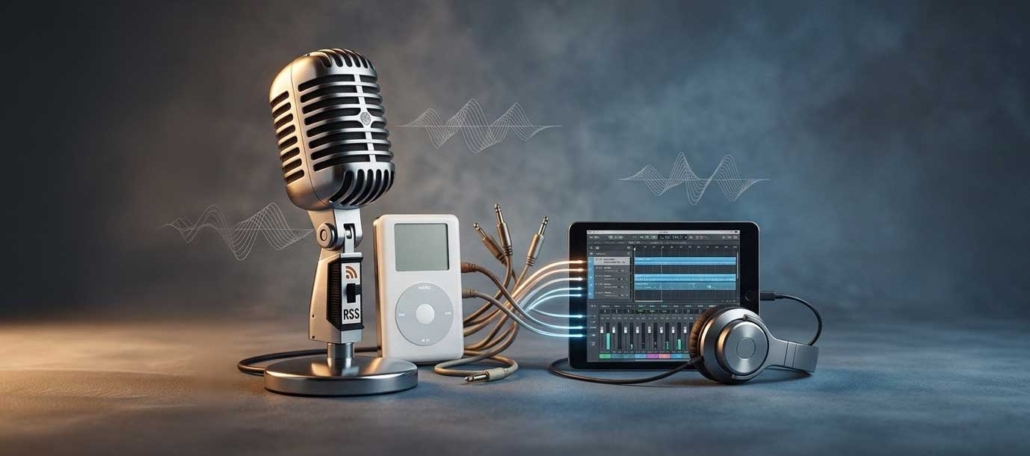
Many described the term podcast as simply merging RSS feeds with downloadable audio files and MP3 players. All of those were important, but there's much more to the story. Podcasts allowed people to produce audio programs and distribute them on demand. They allowed individuals to create serialized content that would allow them to gain a following.
When you start to understand how digital media continues to evolve and consumers continue to spread out over different mediums, it all begins to add up. Why podcasts have become so popular in today's day and age.
The Architecture of an Idea

Steve Jobs unveiled podcasting support in iTunes at WWDC 2005, with Adam Curry's show displayed on screen. Image source: Apple Inc. Used for commentary and historical context.
People could receive media at any time they wanted. They didn't have to tune into the radio or watch TV at a certain time. It was on-demand content. People started building off of RSS back in the early 2000s.
One developer by the name of Dave Winer created ways to feed information through RSS feeds. People began using these methods to their advantage.
Creators like former MTV VJ Adam Curry showed what you could actually do with those tools, publishing downloadable audio programs on a regular schedule.

The enclosure tag allowed people to feed media through RSS as well. All they had to do was subscribe to that show on their software, and they would be able to receive that show's information. iPods probably gave it its name, but it wasn't until Apple added podcasts to iTunes version 4.9 in 2005 that they became popular.
Where the Term "Podcast" Came From
There was no official name for podcasts prior to 2004. People called it many things, from audio blogging to Downloadable Radio or RSS audio enclosure. There were many terms used for this new form of internet-published audio.
The term Podcast was coined by a journalist from the UK named Ben Hammersley. He used it in his article "Audible Revolution" published in The Guardian on February 2004. He was discussing the concept of online publishing, downloadable audio files, and mobile playback devices. It was a combination of iPod and broadcast.
The media began using the term podcast, and people caught on. In 2005, it became more of a mainstream topic when Apple introduced podcasting into their line of products. During his keynote address on June 6th 2005, at WWDC. Steve Jobs spoke about podcasting and described it as TiVo for radio. You get to choose what you listen to. When you want to listen to it.
https://youtube.com/watch?v=y-apsnvYCN0
iTunes released version 4.9 on June 28th 2005. This allowed users to find podcasts and subscribe to them through their software. Podcasts became a legitimate type of media.
Extending the Long-Form Conversation
As with any other form of media, podcasts began as just an audio source. There has been a huge influence from video and visual-based content when it comes to the growth of podcasts. This is nothing new. Talk-to-me-style interviews and rants were a staple on radio and TV for decades. So we can safely say that podcasts evolved from these shows.
Back in the day, before algorithms took over and placed short videos at the top of your feed. We all tuned in to listen to shows that centered around interviews with people like Larry King.
Larry King had a simple concept. Me, the guest, and some questions that allowed the listener to dive deeper into a subject. This is how many podcasts are constructed today. Interviews with the host and guest talking about various subjects.
He was able to tap into people's curiosities about certain subjects. He never knew everything about a subject but was able to learn along with his listeners. This is something you can find in many podcasts today. Long interviews allow you to get to know someone, and when you know someone, you tend to listen to what they have to say.
In the 90s and early 2000s, there were set times that these interviews could take place. Podcasting allowed for these long-form interviews to be distributed to the masses. Something we experience every day here at TravSonic Audio Production. Podcasting gave creators more time to dive deep into subjects they enjoy.
There were many audio sources that led up to podcasting. Shows such as This American Life helped pave the way. It became a podcast and allowed many more people to hear about this great show. Once Serial came out, it blew up and showed the world that podcasts could be listened to by many.
Why the Podcast Medium Matters Today
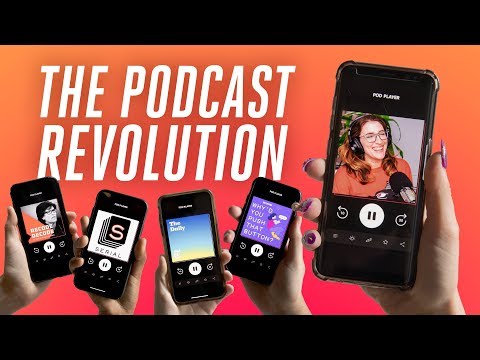
Podcasting has come a long way from it being just a fun little alternative publishing idea. It's now a huge part of the online world. With easy access to production and the ability to reach people.
With podcasts, you have the ability to go in depth on any subject. There are tons of short-form content online. Podcasting allows creators to dive deeper into subjects. Whether it be through in-depth dialogue. News reporting or topics that may require more information. Podcasters don't have to fit their show into 60 seconds, they can allow conversations and stories to play out.
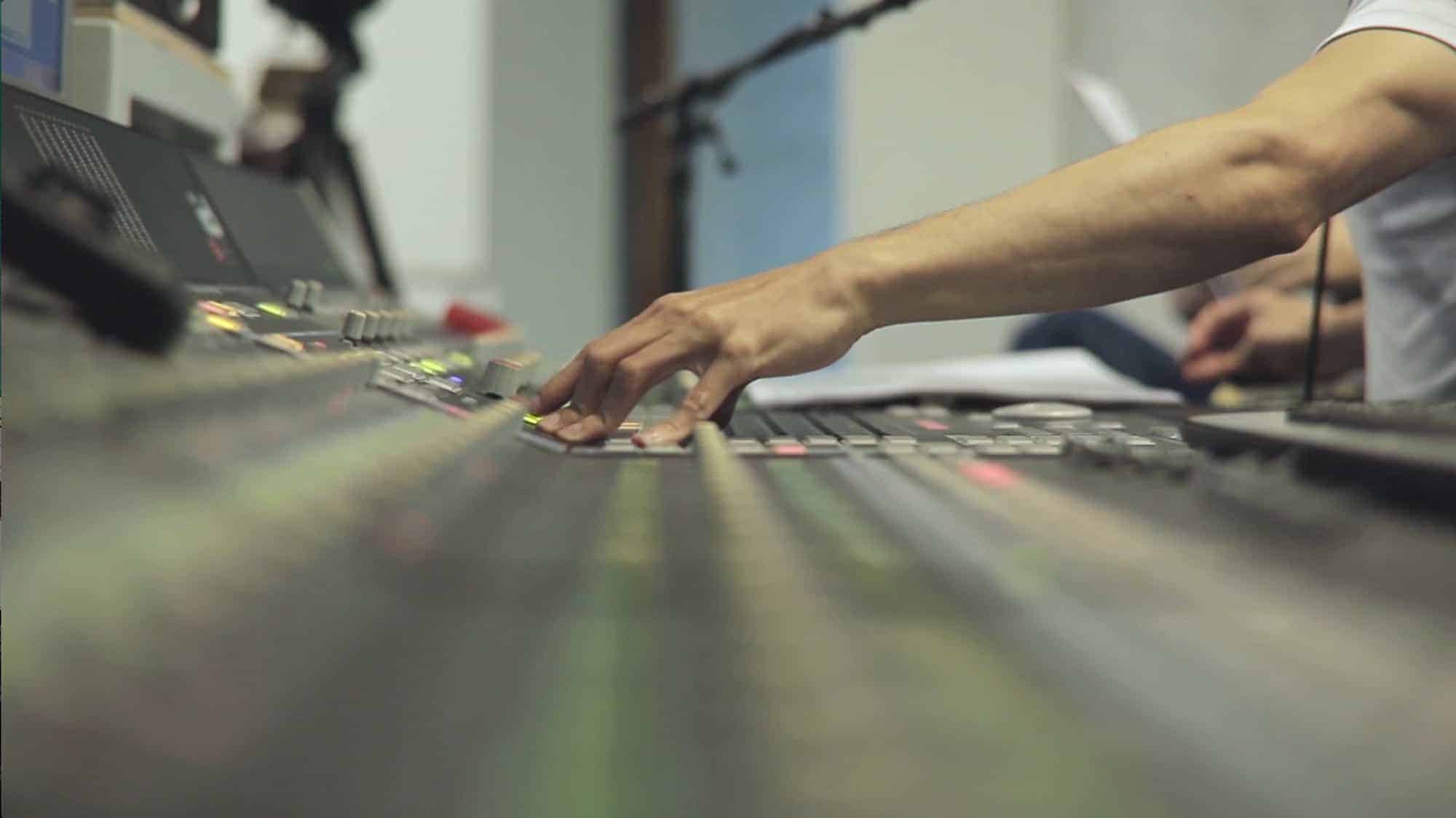
Podcasts are also allowing for better quality audio. Some may still have their show recorded in their bedroom, which is cool, but there are many professional studios that produce podcasts. Here at TravSonic Audio Production, we have seen the rise of better production on podcasts. Better mixing. More in-depth audio post-production. We are even starting to see spatial audio mixing and some of the techniques used in film. It only continues to grow. When audio is clean, you aren't taking away from your show, you are building something.
The bond between podcasters and listeners. Listeners can listen to these podcasts for hours on end over the course of many episodes. This builds a familiarity that other media types can't compete with.
The Current Podcast Landscape
What constitutes being successful in the world of podcasts? Of course, you want your show to reach as many people as possible. There are now other metrics that podcasters and advertisers look at. Listener retention, engagement, loyalty, and time listened to are becoming more important.
One of the best shows to exemplify this today is The Joe Rogan Experience. Podcasts can go on for hours and have people listen. Which is amazing.
Not only are the popular shows doing this, but everyone in every industry is implementing aspects of podcasting into their content. Some use elements from the world of video games to help them create atmosphere in their episodes. Many have learned from audiobooks and podcast editing. Or even learn from audio instruction and lessons. People will always find ways to improve their sound quality.
The Return to Long Form
It has continued to thrive along with the rise of short-form videos. Both allow users to consume different types of media. Short videos can be fun to watch, but podcasts allow you to learn about what your favorite creator has to say.
Podcasts are similar to how broadcasting once was. But with the use of digital technology, they are more convenient to make. People can reach their target audience and create content about what they love. Allowing them to grow with their followers.
With everything being so fast these days. Having a microphone to tell your story or talk about something that may take more time to understand is great.