What is Dolby ATMOS Binaural? Mixing Immersive with Headphones

Immersive audio experiences have gained immense popularity across film, television, and music. One groundbreaking tool that has transformed how mixing engineers build spatial soundscapes is Dolby Atmos Binaural monitoring. But how does this technology translate full-sphere spatial audio to standard headphones, and how do you harness it in your workflow?
The Science Behind Dolby ATMOS Binaural: How Does It Work?
Dolby Atmos Binaural rendering creates a three-dimensional soundscape for mixing engineers working on headphones. By applying Head-Related Transfer Functions (HRTF), the software simulates how human ears perceive direction, elevation, and proximity in physical space, allowing users to locate sounds all around them using standard stereo headphones.
Instead of replacing a calibrated multi-speaker studio, Atmos Binaural offers an accurate representation of a surround or object-based mix on headphones. Advanced spatial processing shapes frequency response and timing cues, giving engineers a dependable environment for spatial monitoring anywhere.
The ATMOS Renderer & Binaural Metadata
 It is important to distinguish Dolby Atmos Binaural monitoring from static binaural dummy-head recordings or consumer playback features like Apple Spatial Audio head-tracking. In professional audio production, binaural rendering is managed inside the Dolby Atmos Renderer or integrated DAW renderers (such as Avid Pro Tools, Apple Logic Pro, or Steinberg Nuendo).
Having access to the Dolby Atmos Renderer allows engineers to build, monitor, and adjust immersive mixes on headphones without immediate access to a physical 7.1.4 speaker room. Furthermore, it gives mixers direct control over how individual audio elements translate to consumer headphone listeners.


Assigning Binaural Render Modes (Off, Near, Mid, Far) in the Dolby Atmos Renderer.
Controlling Proximity with Binaural Render Modes
When mixing in Dolby Atmos, you can assign a specific Binaural Render Mode to every bed channel and object in your session. These metadata settings dictate how much HRTF filtering and spatial distance modeling are applied during headphone rendering:
- Off: Bypasses binaural processing entirely, routing the object directly to the left and right ears like traditional stereo pan. Ideal for direct center-channel dialogue or elements requiring zero phase alteration.
- Near: Applies subtle HRTF processing, placing the sound close to the listener's head. Great for lead vocals, voiceovers, or intimate screen action.
- Mid: Provides a balanced sense of space and externalization, making sounds feel like they are positioned a few feet away. Works well for rhythm instruments, Foley, and side-surround elements.
- Far: Maximizes acoustic diffusion and distance filtering to push elements farther out into the room. Perfect for ambient pads, reverb returns, overhead effects, and distant room reflections.
Crucially, these settings are embedded as metadata within the master ADM BWF file. When a consumer streams your track on Apple Music, TIDAL, or Amazon Music, the streaming platform's spatial decoder uses your embedded metadata to render the binaural headphone experience exactly as you intended.
Experience Simulated ATMOS Surround Sound on Headphones

By calculating time delays, spectral cues, and level differences between the left and right ears, Dolby Atmos Binaural simulates how sound travels through physical air. Whether panning a jet overhead or placing subtle ambient rainfall behind the listener, the system creates a convincing sense of acoustic space that extends well beyond the headphone drivers.
Applications Across Music, Film, Gaming, and VR
Spatial audio technology has expanded rapidly beyond commercial cinema into music production, competitive gaming, virtual reality, and interactive media.
In music production, spatial mixing removes the constraints of traditional stereo panning. Engineers can spread dense arrangements into a three-dimensional field, giving instruments room to breathe without cluttering the center image or sacrificing low-end impact.

In virtual reality and gaming, precise spatialization enhances immersion and situational awareness. Accurate directional audio allows players to pinpoint footsteps, gunfire, and environmental cues around them, creating a more realistic and competitive interactive experience.
Benefits for Gaming and Interactive Media
Immersive audio provides a distinct advantage in gaming and VR. By creating a continuous 3D soundfield, players can locate off-screen actions with high spatial precision, improving reaction times and spatial navigation in complex environments.
Beyond tactical advantages, object-based audio elevates interactive storytelling. Dynamic soundscapes adapt to player movement and environment geometry, delivering cinematic immersion that keeps players grounded in the virtual world.
Applications in Film and Music Post-Production
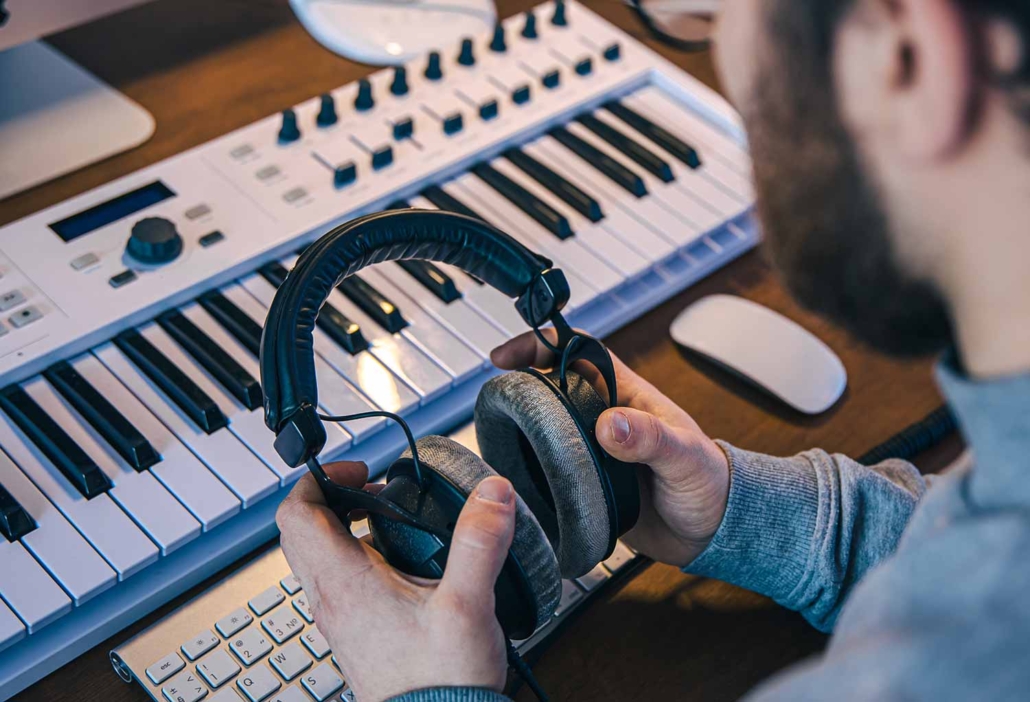
Image by: Freepik.com
Object-based spatial audio gives re-recording mixers and sound designers unprecedented control over where elements live within a room.
Film & Television Post-Production
In film audio post-production, mixing in Dolby Atmos allows sound designers to isolate dialogue, move sound effects along 3D trajectories, and position score elements cleanly across height channels. When monitoring on headphones via binaural rendering, re-recording mixers can verify that dramatic off-screen cues translate clearly for home viewers.
Music Production & Studio Mastering
For record production, spatial audio allows artists to build enveloping sonic environments. Arrangers can place backing vocals high in the soundfield, tuck rhythm guitars to the sides, and preserve a pristine center pocket for lead vocals and bass line.
Sound Design & Game Audio
Modern sound design relies heavily on spatial depth. By using binaural render modes effectively during editorial, sound designers can craft complex multi-layered environments, from expansive outdoor landscapes to tight interior spaces, ensuring every element occupies its own space in the binaural mix.
Conclusion
Dolby Atmos Binaural technology bridges the gap between multi-speaker mixing environments and consumer headphone listening. By combining precise HRTF modeling with controllable metadata settings like Near, Mid, and Far render modes, audio engineers can craft, monitor, and deliver immersive 3D soundscapes with complete confidence.
Whether you are mixing a feature film, producing immersive tracks for streaming platforms, or designing soundscapes for game engines, mastering the Dolby Atmos Binaural workflow ensures your mix translates effectively to millions of headphone listeners worldwide.