ACX Updates Head & Tail Room Tone Requirements: What You Need Know

If you've submitted audiobooks to be reviewed by ACX lately, you may have noticed that the head and tail room tone specifications have been changed as of the first of October 2026. No official email has been sent from ACX, but the information has been updated on their ACX audio submission requirements sheet.
If you are currently meeting ACX's legacy preset and setting the head at 0.5 seconds to 1 second, you may start to fail QC when uploading your files.
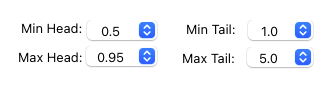
Previous head and tail room tone settings used for ACX audiobook production. The specs for the head have changed to 1 to 5 seconds as of October, 2026.
The Change from 0.5 Seconds to the New Requirement
ACX had required a minimum of 0.5 seconds and no more than 1 second of room tone for the head of the audiobook file. They now require a minimum of 1 second and can go up to 5 Seconds on the head and tail of your master file. The tail requirement of 1 to 5 seconds remains the same.
According to the official ACX spec sheet:
"Keep room tone less than 5 seconds: We recommend between 1 and 5 seconds of room tone at the beginning and end of each file for an ideal listening experience. Room tone spacing must not exceed 5 seconds."
Internal Ad

Although ACX lists a minimum of 1 second, they do mention "recommended." We have found that any audio with less than 1.0 second head and tail room tone is getting flagged and bounced back during automated file inspection.
Strategic Target: Sticking to 1 Second for Multi-Platform Distribution
While the official ACX guidelines now state a maximum limit of 5 seconds for either end, keeping the head strictly at 1 second or slightly over ensures you stay safe with ACX while remaining compliant with strict formatting guidelines from other aggregators if distributing widely across platforms like Voices by INaudio (Findaway Voices), Kobo, or Spotify.
Setting lead-in targets precisely at 1 second maintains consistency across production templates and avoids costly re-renders when delivering files to multiple distributors with differing upper thresholds. Professional audiobook editing and post-production workflows rely on these precise parameters to ensure seamless approval across all retail channels.
Avoiding Digital Silence Traps in Automated QC
Length is only half of the equation. ACX's QC algorithms also test the audio content within that lead-in and tail-out window.
If your mastering export or DAW batch processing inserts absolute 0% digital silence at the head or tail, the validation parser may fail to register proper room tone. To pass ACX's automated checks:
- Maintain Natural Ambient Content: Ensure that lead-ins and tail-outs contain actual continuous room tone rather than gated or muted digital silence.
- Incorporate Transparent Room Tone in Mastering Chains: To prevent unexpected bounces caused by rendered silence or hard truncations, mastering workflows should explicitly integrate a subtle, continuous bed of natural room tone across the head and tail buffers as part of broader audio post-production quality control.
Why You Haven't Seen This in Search Engine or AI Results Yet
Because ACX implemented this update without a mass broadcast announcement, awareness has spread primarily through post-production forums, online author communities, and direct QC bounce reports.
Most public web indexes, forum archives, and AI tools still reflect the legacy 0.5-to-1-second lead guidance. It will take time for web crawlers and indexers to surface the revised criteria across third-party blogs and audio tutorials. Checking the official ACX support documentation directly remains essential for verifying active compliance parameters.