How does film mixing differ between theatrical & streaming?

The viewing experience for film can vary dramatically depending on whether you’re in a theater or streaming at home. A key factor contributing to this difference is sound mixing, which is tailored for each platform.
When it comes to presenting a film, the idea that a single mix can effectively cater to movie theaters, streaming services, broadcast television, and online platforms is fundamentally flawed. Each of these mediums requires unique specifications that demand expertise.
Key Differences
Theatrical
Movies shown in theaters have a controlled sound environment with a broad dynamic range tailored for an immersive experience compared to most home setups. These mixes might not translate to the home environment and seem too quiet or loud in sections.
Theatrical releases undergo a meticulous mixing process on large dubbing stages that are specifically designed to replicate the acoustics of a theater environment.
Streaming
Films intended for streaming must consider varying home environments where sound may be less controlled. Thus mixes for streaming are usually more compressed having less dynamics. Likewise, sound adjusted for streaming may not translate well in a movie theater being too loud and less dynamic.
Streaming platforms frequently compress the audio to facilitate better playback across diverse internet speeds and devices. Unlike movie theaters, which playback large uncompressed files that require extensive storage and high-bandwidth systems.
Broadcast
Like streaming, broadcast often requires specific adjustments due to its compression methods and transmission standards. It also involves technical specifications and quality control enforced by networks such as a target of -24 LUFS for integrated loudness.
Websites and Online
Showcasing your film on the web is less strict for sound specifications. However, platforms such as YouTube do normalize the sound and will turn it down if it is too loud when not meeting the -14 LUFS spec. For audio headed to the web such as podcasts and music, it is recommended to target -16 LUFS.
What does LUFS stand for? LUFS stands for Loudness Units Full Scale, a standard measurement in audio production used to quantify the perceived loudness of the entire program material.

The following image shows the loudness range for different LUFS integrated values on a dialogue recording.
Mixing Sound for Theatrical Releases

An interpretation of a film mixing dub stage. AI mage by Freepik.com
When you enter a movie theater, you’re enveloped in an auditory landscape designed to captivate your senses. The cinema offers families a unique opportunity to step away from their daily routines and immerse themselves in another world for two hours.
With the advancement of immersive audio, such as Dolby Atmos, the sound experience has taken a step further. The sound is not merely an accompaniment to what unfolds on the screen; it becomes a powerful character in its own right, engineered with precision to create an overwhelming sense of immersion.
Audio Specifications for Movie Theaters
Films are meticulously mixed to take full advantage of advanced sound systems that are specifically engineered for large spaces and a broad dynamic range. This careful mixing process ensures that every auditory element, from the softest whispers to thunderous explosions, can be experienced with clarity and impact, enhancing the overall cinematic experience.
While theaters technically do not measure loudness with LUFS, dialogue for film generally sits around -31 to -27. Netflex has adopted the film standard for dialogue which has been set to -27 LKFS +/- 2 LU dialog-gated.
It’s also important to note that Dolby Atmos has it’s own strict loudness specs which is -18 LUFS integrated with a true peak of -1 dBTP. Unlike traditional theatrical sound which does not have a LUFS loudness limit, Atmos integrated loudness can not go over -18 LUFS or it will be rejected.
Speaker Volume Calibration for Theatrical Mixing
Mixing to a speaker calibration of 85 decibels (dB) SPL on a dub stage is the industry standard for sound in films intended for theaters. It is a carefully considered benchmark that ensures optimal auditory experiences for audiences.
Calibration for medium to Small sized mixing rooms
For smaller mixing rooms, a speaker calibration between 75 – 79dB SPL is often used when a large dub stage is not available. Movie theaters have large rooms with the speakers positioned a far distance from the listener, unlike a near-field speaker setup which is 6 feet away from the audio engineer. Mixing at 85dB SPL in a small room with near-field speakers would be extremely loud and painful.

| Speaker Calibration for Standard Film | Integrated Loudness | True Peak | Playback |
| 85 decibels (dB) Larger Rooms | 79 decibels (dB) Smaller Rooms | -31 to -27 LUFS | -2dBFS | Cinema |
| Speaker Calibration for Dolby Atmos | Integrated Loudness | True Peak | Playback |
| 85 decibels (dB) Theatrical | 79 decibels (dB) Home Theater | -18 LUFS | -1dBFS | Cinema |
Furthermore, 85dB strikes an essential balance between clarity and power, enabling filmmakers to convey emotions and narrative nuances effectively without overwhelming the audience. This reference level is crucial because it aligns with the playback system used in Dolby Cinema theaters, which are engineered to deliver high-quality sound that immerses viewers in the cinematic experience.
Have you ever watched a movie at home and noticed that sometimes the music is too loud or the dialogue is too quiet? In most cases, you’re watching the theatrical version in a home setting, and it doesn’t translate correctly as it would in a cinema.
Mixing Sound for Streaming Services (OTT)
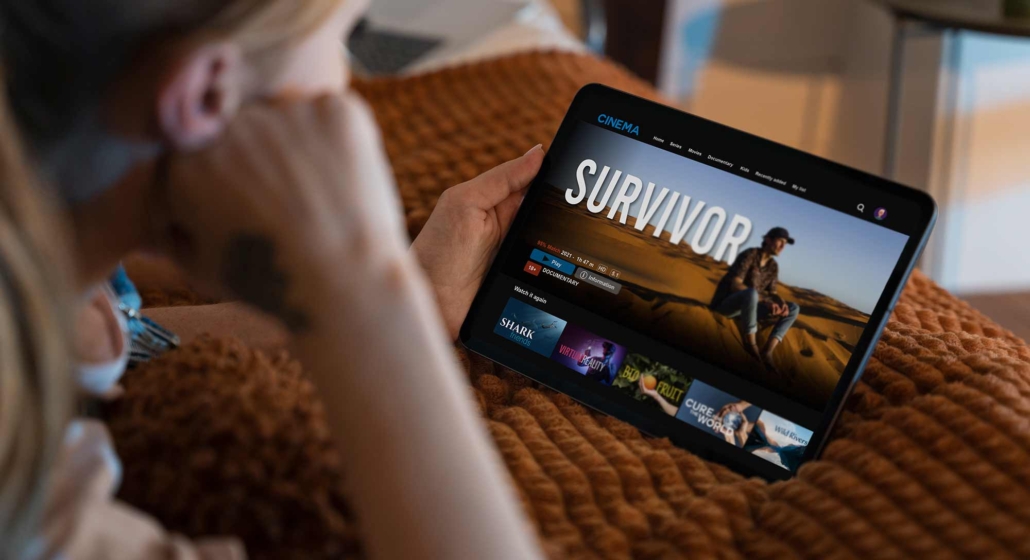
Image by Freepik.com
Films intended for streaming often undergo a different mixing process tailored for smaller playback environments, such as home theaters, TVs, and computer setups.
While home setups may include high-quality speakers or even surround sound systems, they typically can’t replicate the same power and depth found in a theater. As such, audio engineers adjust levels and dynamics accordingly, ensuring that dialogues remain clear and effects resonate without overwhelming viewers.
Audio Specifications for Streaming
Movies mixed for OTT streaming platforms often undergo an audio compression process that alters their original audio dynamics. This results in a listening experience that is distinctly less dynamic from theater formats.
This audio compression is primarily designed to ensure that the sound level remains consistent across various devices, from smartphones to home theater systems, which can vary greatly in terms of speaker quality and volume capabilities.
Making Streaming Translate to Various Playback Devices
Unlike the 85 dB mixing standard for calibrated theaters, films mixed for streaming are usually mixed at 79 dB. It’s also important to note that since mixes for streaming have a narrower dynamic range, the integrated loudness is around -24 LUFS, very similar to broadcast. As a result, quieter moments may be less subtle, and loud scenes can be more pronounced to maintain clarity in environments where background noise is prevalent.
This adjustment makes the content more enjoyable for viewers at home or on the go with different playback devices without requiring constant volume adjustments while viewing.
| Speaker Calibration for Streaming Film | Integrated Loudness | True Peak | Playback |
| 79 decibels (dB) | -24 LUFS (target) | -2dBFS | Streaming/Home |
It’s essential to recognize that while this approach enhances convenience for casual viewing, it may also sacrifice some of the rich audio nuances originally intended by filmmakers. Thus, understanding these differences can help audiences appreciate how streaming technology shapes their movie-watching experience while also prompting discussions about the importance of preserving artistic integrity in sound design.
Streaming Movies from Your Home
There are inherent limitations that come into play. While modern technology has made significant strides in delivering decent audio quality through televisions and personal devices, nothing quite compares to the rich acoustics and spatial dynamics found within a well-designed cinema.
Home setups often lack the same caliber of sound equipment that theaters boast—such as multi-speaker arrangements that enable complex layering and directionality of sound effects—resulting in a less immersive experience. Thus, while watching films at home offers convenience and flexibility, it inevitably sacrifices some elements that elevate cinematic storytelling when experienced in theaters.
This distinction highlights why many cinephiles argue that watching a film in theaters provides a superior experience compared to streaming at home. The mix isn’t just about convenience; it’s about crafting an auditory journey that complements the visual storytelling—something that’s often lost when films are adapted for smaller screens.
Conclusion
So next time you consider whether to hit the cinema or stay in with your favorite streaming service, remember: it’s not just about what you see; it’s also about what you hear—and how it’s mixed can make all the difference.